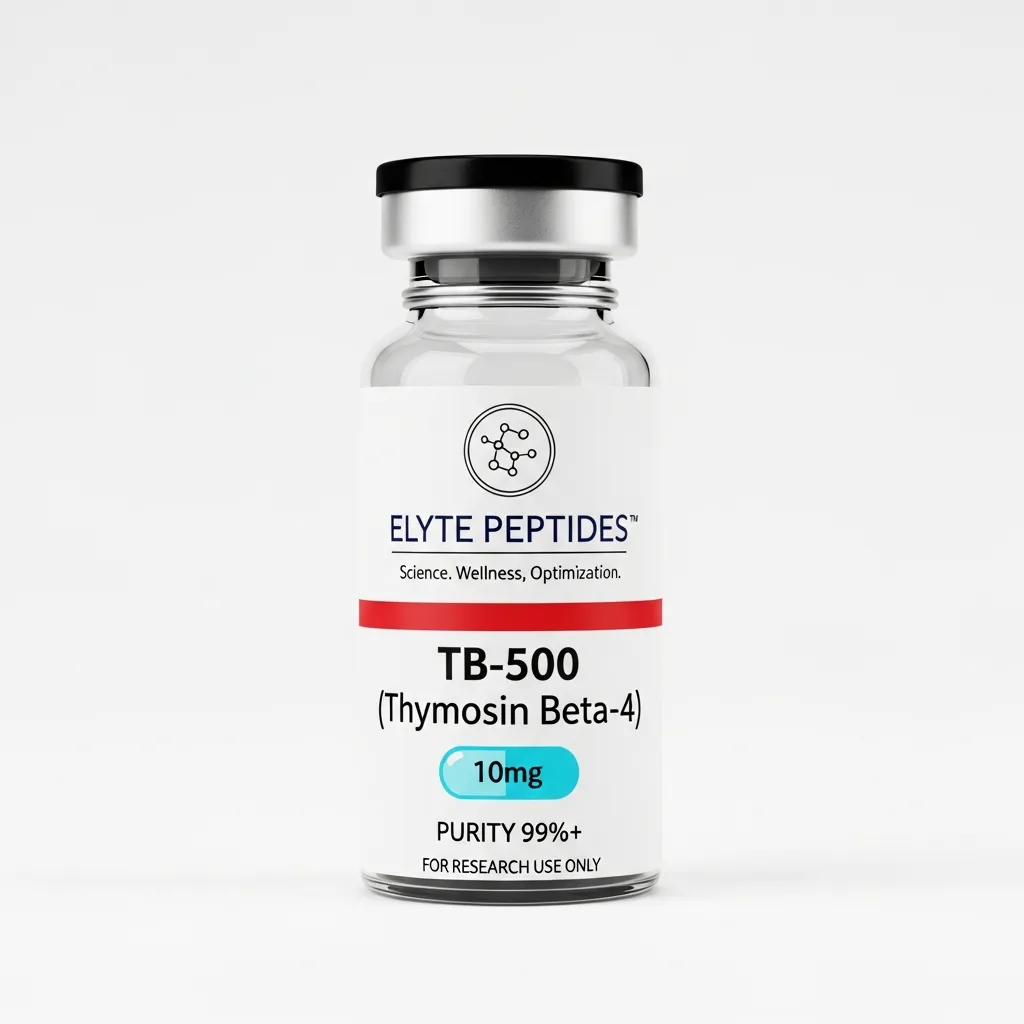
TB-500 (Thymosin Beta-4)
Synthetic 43-amino acid peptide for tissue repair and anti-inflammatory research.
Description
Synthetic 43-amino acid peptide for tissue repair and anti-inflammatory research.
TB-500 is the synthetic version of Thymosin Beta-4, a naturally occurring 43-amino acid peptide present in virtually all human and animal cells. Its primary mechanism of action centers on sequestering G-actin monomers, which promotes actin polymerization and cell migration essential for tissue repair. TB-500 also upregulates expression of laminin-5, a key component of the basement membrane, and activates Akt (protein kinase B) signaling, which research indicates promotes cell survival and inhibits apoptosis. Published studies have demonstrated TB-500's wound healing properties in dermal repair models (Malinda et al., Journal of Investigative Dermatology, 1999) and corneal epithelium regeneration. In equine research, Thymosin Beta-4 has been extensively studied for tendon and ligament repair, with published veterinary trials showing accelerated recovery timelines. The peptide's anti-inflammatory properties appear to operate through suppression of NF-kB and reduction of pro-inflammatory cytokines including IL-1beta and TNF-alpha. Compared to BPC-157, TB-500 has a broader tissue distribution and systemic migration capability, making it a preferred research compound for widespread inflammatory conditions rather than localized injury models. The two peptides target complementary repair mechanisms, which is why they are frequently combined in research protocols. Store lyophilized powder at -20C; reconstitute with bacteriostatic water and refrigerate at 2-8C for up to 28 days. TB-500 is investigated by regenerative medicine centers, veterinary research institutions, and cardiology labs studying post-ischemic tissue recovery.
This product is supplied as a lyophilized powder and is intended for laboratory and research use only. Not for human consumption. Each vial contains 10mg of research-grade material.
Research Applications
- Angiogenesis and blood vessel formation
- Wound closure and tissue regeneration
- Collagen synthesis and scar reduction
- Anti-inflammatory activity in joints
Specifications
- Size
- 10mg
- Purity
- ≥98% (HPLC)
- Form
- Lyophilized Powder
- Molecular Formula
- C212H350N56O78S
- Molecular Weight
- 4963.44 g/mol
- CAS Number
- 77591-33-4
Storage & Handling
- Long-term storage: -20°C in a sealed, light-protected container
- Short-term storage: 2-8°C (refrigerated) for up to 30 days
- Reconstituted: Store at 2-8°C and use within 30 days
- Avoid: Repeated freeze-thaw cycles, direct sunlight, and moisture exposure
- Reconstitution: Use bacteriostatic water or sterile water for injection
Frequently Asked Questions
What is TB-500 (Thymosin Beta-4) and how does it work?
What research has been done on TB-500?
How does TB-500 compare to BPC-157?
What is the recommended reconstitution protocol for TB-500?
What purity testing is performed on TB-500?
Related Products
Research Use Only. This product is not intended for human consumption, therapeutic use, or diagnostic purposes. All peptides sold by Elyte Peptides are strictly for in-vitro research and laboratory use. By purchasing, you agree to use this product in compliance with all applicable laws and regulations.