Third-Party Tested ≥98% HPLC Purity — USA Shipped

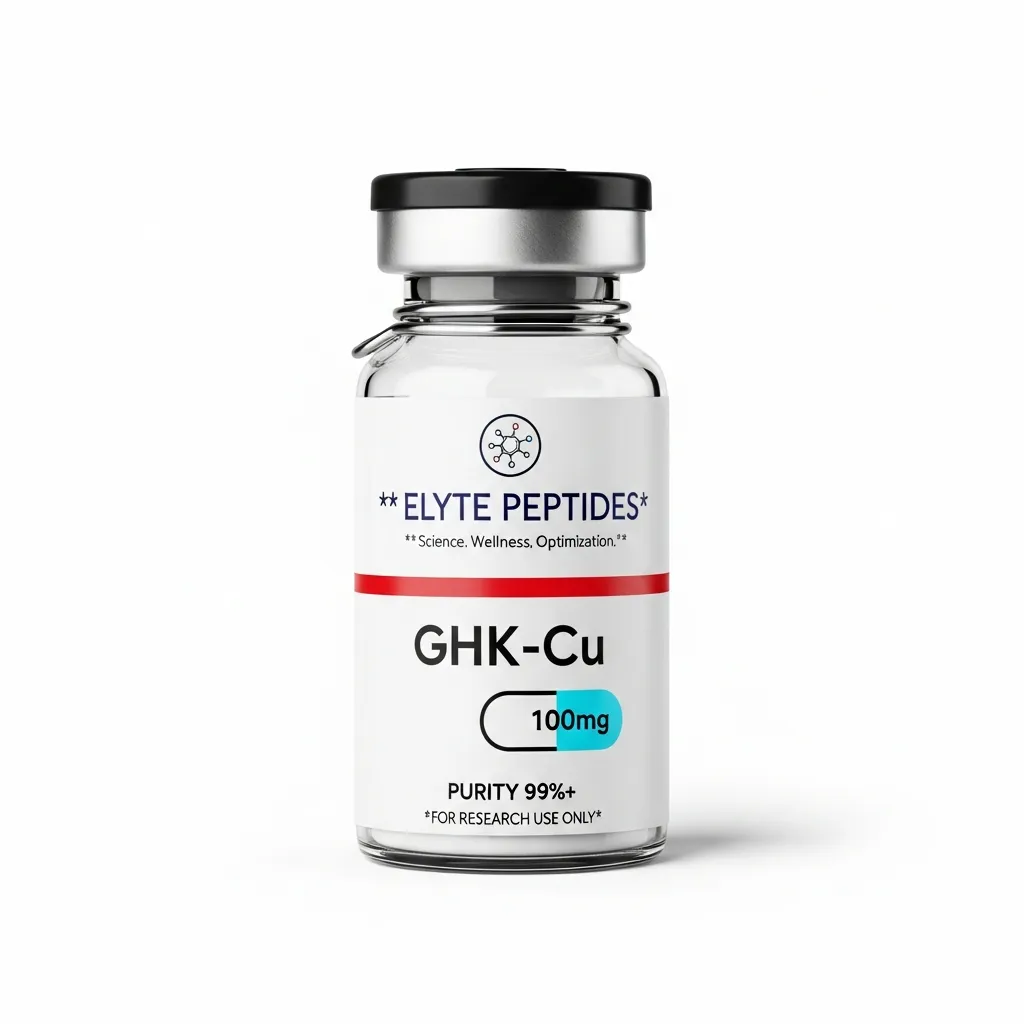
GHK-CU 50mg - Research Peptide
Bioregulatory & Senescence 50mg

GHK-CU 50mg

$40.00 In Stock

Copper-binding tripeptide for skin regeneration and cellular-aging research.

$40.00
1
≥98%
HPLC Purity
COA
Included
USA
Based Supplier

Description

Copper-binding tripeptide for skin regeneration and cellular-aging research.

GHK-Cu (glycyl-L-histidyl-L-lysine copper complex) is a naturally occurring copper-binding tripeptide first isolated from human plasma by Pickart and Thaler in 1973. Its mechanism of action involves delivering bioavailable copper ions to tissues, where copper serves as a cofactor for lysyl oxidase (collagen crosslinking), superoxide dismutase (antioxidant defense), and other metalloenzymes critical for tissue maintenance. GHK-Cu modulates gene expression of over 4,000 human genes, broadly shifting patterns toward tissue remodeling and repair (Pickart et al., BioMed Research International, 2012). Research demonstrates it upregulates collagen types I and III, elastin, decorin, and glycosaminoglycan synthesis while simultaneously downregulating metalloproteinase activity that degrades extracellular matrix. In wound healing studies, GHK-Cu accelerated dermal wound contraction and re-epithelialization in animal models (Leyden et al., Archives of Dermatological Research, 2002). The peptide also shows neuroprotective properties; studies suggest it reduces oxidative damage markers and may support nerve regeneration through NGF and VEGF upregulation. Compared to retinoids and vitamin C in skin research, GHK-Cu operates through a fundamentally different mechanism centered on copper-dependent enzymatic activity and broad transcriptomic remodeling rather than receptor activation or direct antioxidant scavenging. At 100mg, this formulation supports extended research studies. Store lyophilized powder at -20C protected from light; reconstitute with sterile water and refrigerate at 2-8C. GHK-Cu is researched by dermatology departments, cosmetic science laboratories, and neuroscience institutions studying copper-dependent tissue repair and gene regulation.

This product is supplied as a lyophilized powder and is intended for laboratory and research use only. Not for human consumption. Each vial contains 50mg of research-grade material.

Read the full GHK-CU research guide

Research Applications

  • Dermal-regeneration and senescence research
  • ECM-repair and antimicrobial-peptide research
  • Neuroprotection-pathway research
  • Nociception-pathway research

Specifications

Size
50mg
Purity
≥98% (HPLC)
Form
Lyophilized Powder
Molecular Formula
C14H23CuN6O4
Molecular Weight
401.91 g/mol
CAS Number
89030-95-5

Storage & Handling

  • Long-term storage: -20°C in a sealed, light-protected container
  • Short-term storage: 2-8°C (refrigerated) for up to 30 days
  • Reconstituted: Store at 2-8°C and use within 30 days
  • Avoid: Repeated freeze-thaw cycles, direct sunlight, and moisture exposure
  • Reconstitution: Use bacteriostatic water or sterile water for injection

Frequently Asked Questions

What is GHK-Cu and how does it work?
GHK-Cu (glycyl-L-histidyl-L-lysine copper complex) is a naturally occurring copper-binding tripeptide found in human plasma, saliva, and urine. It functions by delivering bioavailable copper(II) ions to tissues, activating copper-dependent enzymes including lysyl oxidase (critical for collagen cross-linking) and superoxide dismutase. In preclinical research, GHK-Cu has been observed to modulate the expression of over 4,000 genes related to tissue remodeling, antioxidant defense, and stem cell activity.
What research has been done on GHK-Cu?
Research by Dr. Loren Pickart (published in Journal of Biological Chemistry and multiple dermatology journals) characterized GHK-Cu's role in wound healing and gene expression modulation. Studies demonstrated increased collagen I and III synthesis, elastin production, and glycosaminoglycan accumulation. Broad gene expression analysis (Genome Medicine, 2014) showed GHK-Cu influences pathways related to anti-inflammation, DNA repair, and tissue remodeling.
How does GHK-Cu compare to Snap-8?
GHK-Cu and Snap-8 address skin aging through fundamentally different mechanisms. GHK-Cu works at the cellular level by promoting collagen and elastin production, activating stem cells, and modulating gene expression for tissue remodeling. Snap-8 acts by inhibiting SNARE complex formation to reduce neuromuscular activity underlying dynamic wrinkles. GHK-Cu is more broadly studied for regenerative applications, while Snap-8 research focuses specifically on expression-line reduction.

Related Products

Research Use Only. This product is not intended for human consumption, therapeutic use, or diagnostic purposes. All peptides sold by Elyte Peptides are strictly for in-vitro research and laboratory use. By purchasing, you agree to use this product in compliance with all applicable laws and regulations.